When the Dial Tone Dies: What the Copper Switch-Off Really Means for UK Home Workers
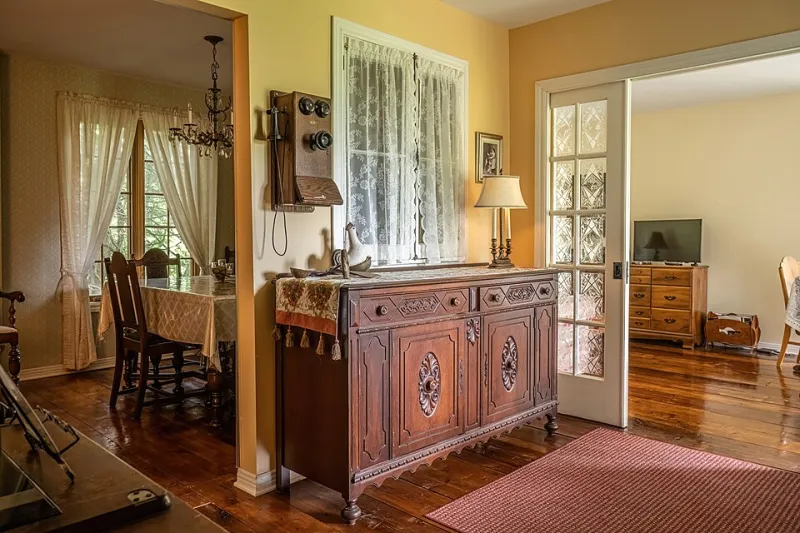
Photo: Wilfredor, CC0, via Wikimedia Commons
There is a small plastic box in the hallway of most British homes that has been quietly doing its job since the 1980s. It has never needed a software update. It has never asked for a password. It kept working during the storm, during the flood, and during the two-hour power cut in 2019 when everything else in the house went dark. It is about to be retired, and a surprising number of people who work from that hallway have not thought through what replaces it.
What is actually changing
Openreach is shutting down the public switched telephone network — the copper system that has carried analogue voice since the Victorian era, more or less. The timetable has slipped more than once, which is why it keeps surprising people: the current published target is to stop selling legacy analogue products at the end of January 2027, with full retirement of the old network following after that. Plenty of premises have already been migrated, whether or not anyone in the house noticed.
The replacement is usually badged as 'digital voice'. It's worth being clear about what that means, because the marketing blurs it. Your calls are still ordinary phone calls. What's different is the plumbing: the phone now runs as a service over your broadband connection, terminating in the router or a small adapter rather than in a dedicated line that carries its own power and its own dial tone.
Two consequences follow, and they matter more than the call quality.
First, no broadband means no phone. Second, no electricity means no phone — not because the network has failed, but because the base unit in your hallway has nothing to run on. The old line powered the handset from the exchange. The new one powers nothing.
Who this quietly inconveniences most
Home workers are not the loudest group in this, but they're one of the most exposed.
Think about the classic arrangement: one line into the house for broadband, one separate analogue line for the 'office', often with a business number and a desk phone. That second line is a legacy product. It disappears into a single broadband-dependent setup, and with it goes the assumption that your work calls and your internet can fail independently. They can't any more.
Then there's the equipment nobody thinks of as a phone line. Intruder alarms that signal over the analogue line — including the old Redcare-style systems, which are being withdrawn. Telecare pendant base units, which are lifelines for a lot of people and are frequently installed in the homes of people who also have a home office. Lift phones, gate intercoms, CCTV diallers, chip-and-PIN terminals in a home workshop, franking machines. And yes, fax — still clinging on in parts of the NHS, in pharmacy ordering and in a few trade supply chains.
If any of that applies to you, the migration is not a broadband upgrade. It's a small project with third parties in it.
The room-by-room checklist
Work through the house rather than the contract. The contract will tell you what you're buying; the house will tell you what's actually plugged in.
Hallway. The master socket, the router, and that mysterious adapter the provider sent. Confirm which port the digital voice service uses and whether the old wall sockets go dead or stay live during a transition period.
Study. Desk phone, headset, softphone. Decide whether you genuinely need a hard handset or whether a mobile-first setup is now the honest answer. If a client-facing number matters, check the porting window before you switch anything.
Kitchen and living room. Extension handsets. Most digital voice setups support them, but the base unit now needs mains power — so every handset in the house dies together.
Bedroom or spare room. Telecare and personal alarm base units. Speak to the provider weeks in advance, not the week of the switch. Ask directly whether the unit is compatible and what replaces it.
Garage, shed, utility cupboard. Alarm panel, CCTV recorder, any signalling device with a phone lead. Anything with a modem in it deserves a question.
The broadband itself. If you're on fibre to the premises, the phone service already depends on it. If you're still on copper, the migration date is also your broadband date — they're the same appointment.
Questions worth putting to your provider
Ask these before you agree to anything, and get the answers in writing if you can:
- Will my number port automatically, and is there any window in which I could lose it?
- What happens to my second line, and can I keep a separate business number?
- Is there a battery backup unit, how long does it last, and who supplies and pays for it?
- What do you guarantee for emergency calls during a power cut?
- If I drop the phone service entirely, does my broadband price change?
- What's my premises' migration date, and how much notice will I get?
- Do you support my alarm or telecare equipment, or do I need to speak to the manufacturer?
That fourth question is not rhetorical. Ofcom has pushed providers to make resilience options available — typically a battery unit or a mobile-based fallback — to customers who need them, and to be upfront about power-cut limitations. Whether you count as someone who needs them is a conversation you may have to start yourself.
The power cut problem, honestly
Here's the test worth running before winter. Unplug the router for ten minutes. Note what stops working, including the phone, the alarm, the doorbell, the heating controls and anything else that assumed a live line. Then ask yourself what you'd do if that lasted a day.
The realistic answers are unglamorous:
A small uninterruptible power supply on the router and the fibre termination point will buy you a few hours, which is often enough to finish a call and send an apologetic email. Size it by adding up the wattage on the labels, then halve your expectations.
A mobile router or a phone hotspot on a different network to your main broadband is the single most useful backup, because it fails for different reasons. A 4G fallback that runs on the same infrastructure as your primary connection is a spare tyre made of the same rubber as the one that just punctured.
Keep a charged power bank and at least one phone you can actually make calls on, and make sure your mobile number — not the landline — is the contact number on your business accounts, your bank and your client correspondence. That one change has rescued more home workers than any gadget.
Make it a twenty-four-hour job, not an emergency
The copper network is being switched off on a schedule you don't control, but almost everything that goes wrong with it is a planning failure rather than a technical one. The people who coast through this are the ones who asked their alarm company a question in September rather than discovering the problem in February.
So: walk the house, write the list, ask the awkward questions, run the ten-minute outage drill. The dial tone has been the most dependable thing in British homes for forty years. Its replacement isn't worse — it's just less forgiving, and it will reward the people who noticed it was coming.